
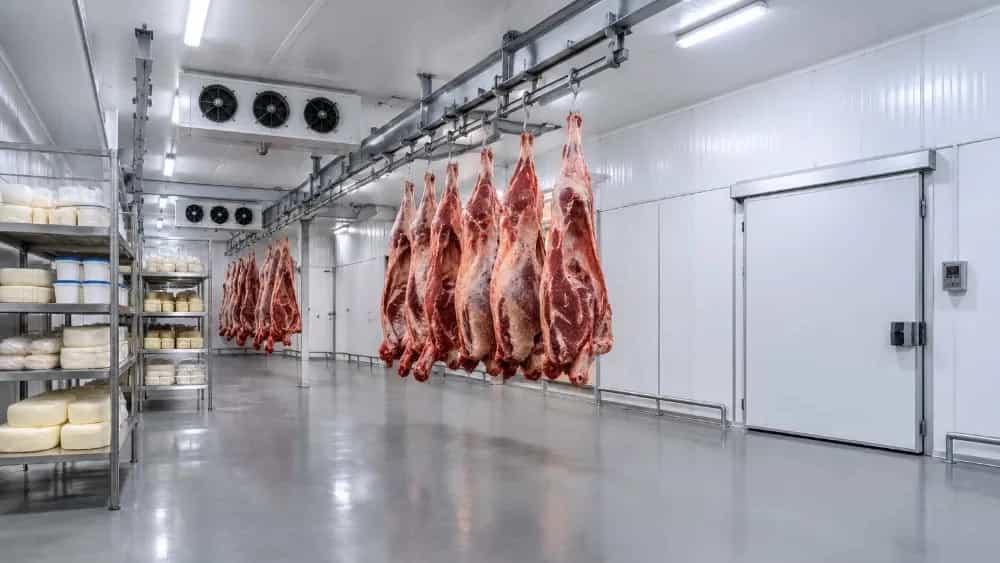
Construction of cold storage for food, meat and dairy requires continuous insulation with 40 density polyurethane sandwich panels, accurate separation of above-zero and below-zero halls, and scientific calculation of the refrigeration load based on the daily product input capacity. Failure to control the thermal bridges at the joints of the wall and floor increases the rate of protein weight loss and bacterial spoilage of dairy products by 35%. The success of these structures depends on the exact balance between the compressor, evaporator and seamless sealing.
Industrial cold storage is structurally different from normal storage in practice. In the field investigations of the processing lines, the most common technical defect is due to the non-compliance of the insulation thickness with the humidity and temperature fluctuations of the region. In many projects, it has been observed that employers face excessive pressure on the compressor and temperature shock due to not estimating the air sealing rate of the doors and the heat from the floor; A factor that causes color change in meat storage and two-phase fat in dairy products.
Technical requirements of temperature separation in protein and dairy cold stores
The storage cycle of red meat and chicken is divided into two stages: quick freezing in the freezing tunnel (temperature -35 to -40°C) and storage in subzero halls (temperature -18°C). Entering hot meat into the storage hall is a common mistake that increases the temperature of the entire hall and destroys the quality of the protein tissue.
On the other hand, dairy cold stores mainly work in the category above zero and in the temperature range of 2 to 4 degrees Celsius. The main challenge in this sector is the management of ammonia gas caused by possible fermentation and relative humidity above 85%. The panels used in dairy parlors should have anti-corrosion coatings such as aluzinc or PVC sheets so that lactic acid and acid vapors caused by continuous washing do not cause the wall sheets to rot.
Insulation standards and selection of sandwich panel thickness
The insulating core has a decisive role in the economic efficiency of the project. In climates with extreme day and night temperature fluctuations, the thickness of the panel should not be less than 10 cm for halls above zero and 15 cm for halls below zero. The use of fireproof polyurethane injection foams with a closed-cell structure prevents the penetration of water vapor into the insulation core; Because the absorption of even 5% moisture in the foam structure reduces its thermal resistance by half.
The way to connect male and female panels or using standard overlap systems along with accurate mastication is the main bottleneck for maintaining internal pressure. In the workshop observations, leaving the corner connections without additional cornering and foaming causes local freezing and 30% loss of the energy of the entire cooling system.
Refrigeration equipment architecture and refrigeration cycle selection
The choice of refrigerant and mechanical parts is directly determined by the size of the hall and the type of product. In small and medium distribution cold stores, Freon condensation systems with environmentally friendly refrigerants have high efficiency and easier maintenance. In large-scale projects, ammonia cycles are preferred due to their excellent thermodynamic efficiency and lower cost of gas charging.
Coordination of compressor, condenser and evaporator
Evaporator dimensions should be designed according to the load's sensitivity to moisture loss. The distance of the evaporator fins in sub-zero meat cold rooms should be between 9 and 12 mm so that the defrosting period is longer and the system does not require frequent defrosts. Smaller fin distances at low temperatures cause the air flow to be blocked quickly and as a result, the compressor runs continuously without refrigeration efficiency.
The location of condensers should also be determined based on prevailing winds and away from direct sunlight in order to prevent the increase of discharge pressure in the summer season.
Floor insulation and the challenge of the phenomenon of soil freezing (Frost Heave)
One of the most costly damages in sub-zero cold stores is the freezing of the soil moisture under the concrete and the swelling of the foundation. The phenomenon of floor destruction makes the panel walls out of alignment and destroys the sealing of the entire hall.
To curb this risk, concrete infrastructure should be equipped with natural ventilation pipes, ventilation channels or heating elements. After that, the use of extruded polystyrene (XPS) layers with high compressive strength, polyethylene vapor barrier and the implementation of polished reinforced concrete will prevent the cold of the floor from transferring to the lower layers of the soil.
Solutions to reduce electricity consumption and current maintenance costs
The reduction of cold room operating costs is achieved before the installation of the engine room and in the phase of making the sandwich panel and placing the dimensions. The implementation of air curtains at the entrances, the pre-cooled corridor (anteroom) to moderate the heat exchange, and the cold LED lighting prevent the sudden jump of the thermal load.
Also, using an inverter to control the engine speed of the compressors reduces the initial depreciation and makes it possible to adapt the cooling power to changes in the input load without incurring heavy costs of electricity demand.